Safer Sleep for Babies: What Every Parent Needs to Know (and What the Guides Don't Always Explain)
I have spent over 27 years working in baby product design — sitting on safety committees, writing safety standards, and presenting at baby shows across the UK. Most parents have heard the safer sleep guidance, but understanding the why behind each rule, and knowing the everyday moments when it is easy to forget, is what really helps.
Why This Matters
SIDS (Sudden Infant Death Syndrome) is the sudden and unexplained death of a baby. It is rare, and the good news is that SIDS rates have dropped by 80% since 1991 — thanks to better research and parents following safer sleep guidance. The steps in this blog are simple, practical, and evidence-based. Every one of them makes a difference.
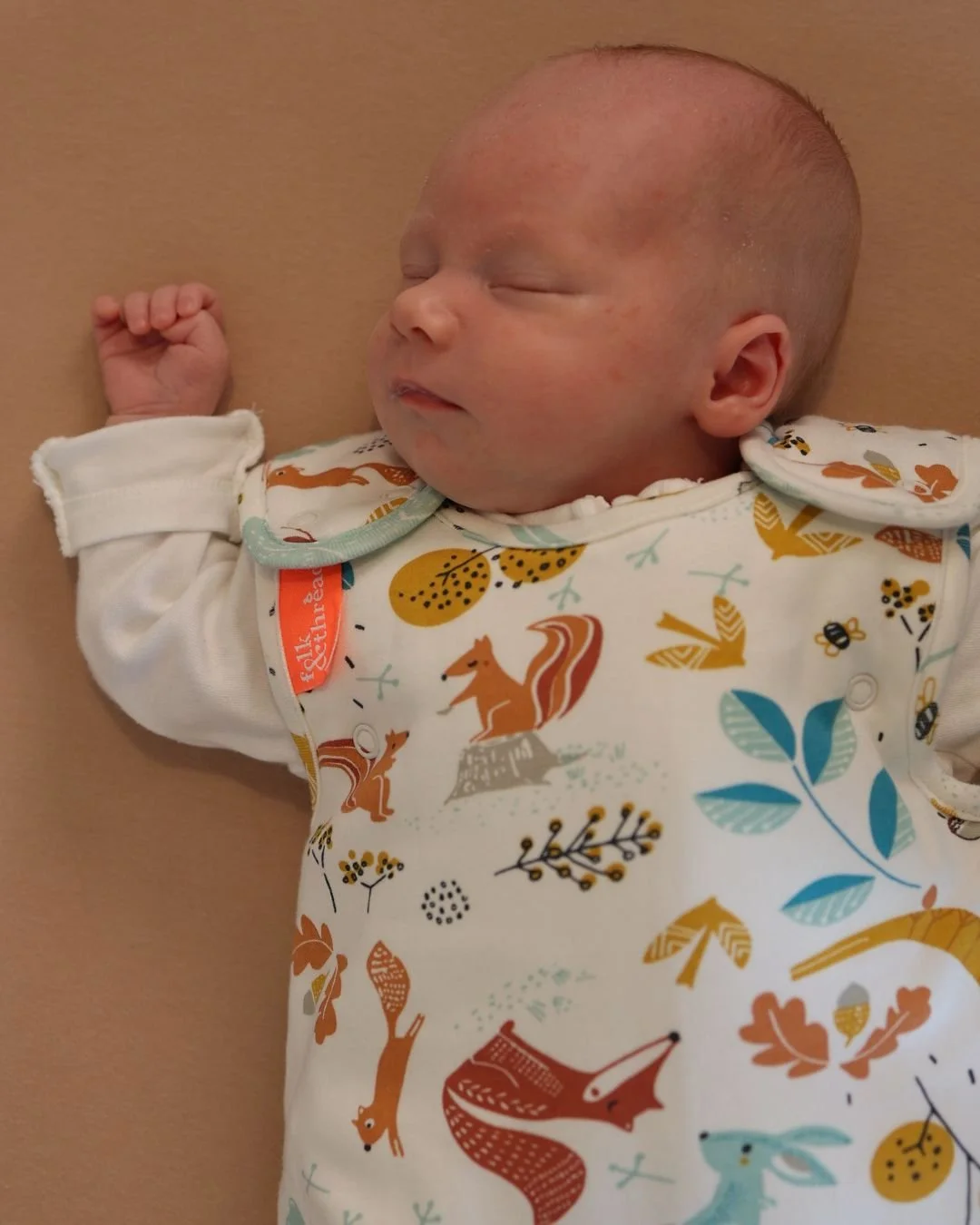
Keep Baby in the Same Room as You — Day and Night
For at least the first six months, your baby should sleep in the same room as you — including naps. Being in the same room means you can check on them easily and regularly, which is one of the most reassuring and protective things you can do.
Many parents worry that household noise will disturb their baby — the television, conversation, everyday sounds. Please don’t worry. Babies are already familiar with the sounds of your home; they heard them in the womb. Those familiar sounds are comforting, not disruptive. What matters most is that you can see and check your baby without going to another room.
Always Place Your Baby on Their Back
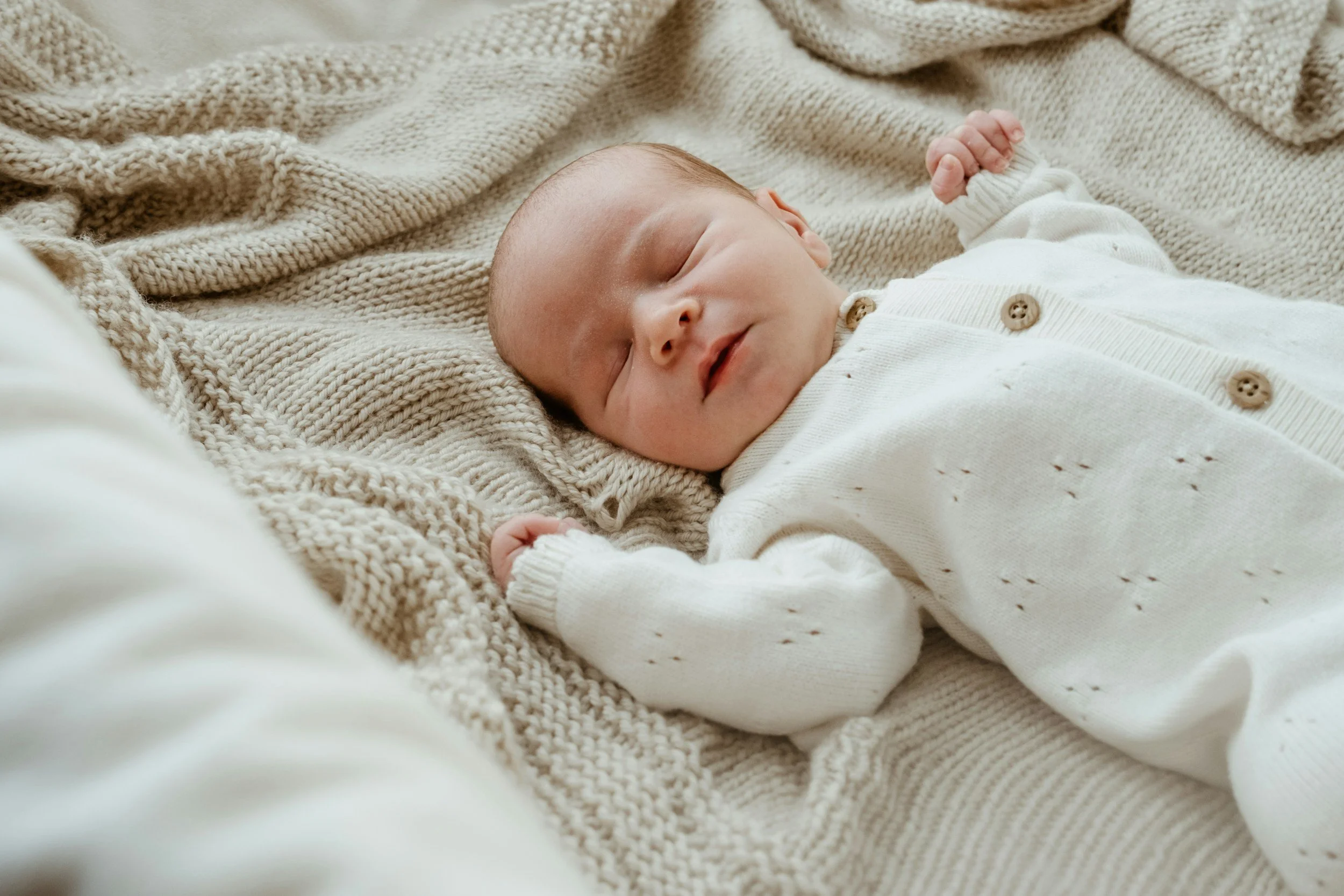
Always place your baby on their back for every sleep. This is the single biggest change that helped reduce SIDS rates so dramatically. In the 1970s and 80s, front sleeping was often advised — we now know back sleeping is much safer.
One moment this is easy to forget: when baby falls asleep in the pram or bouncer. These are not designed for sleep. When you can, gently transfer your baby to their flat sleep space.
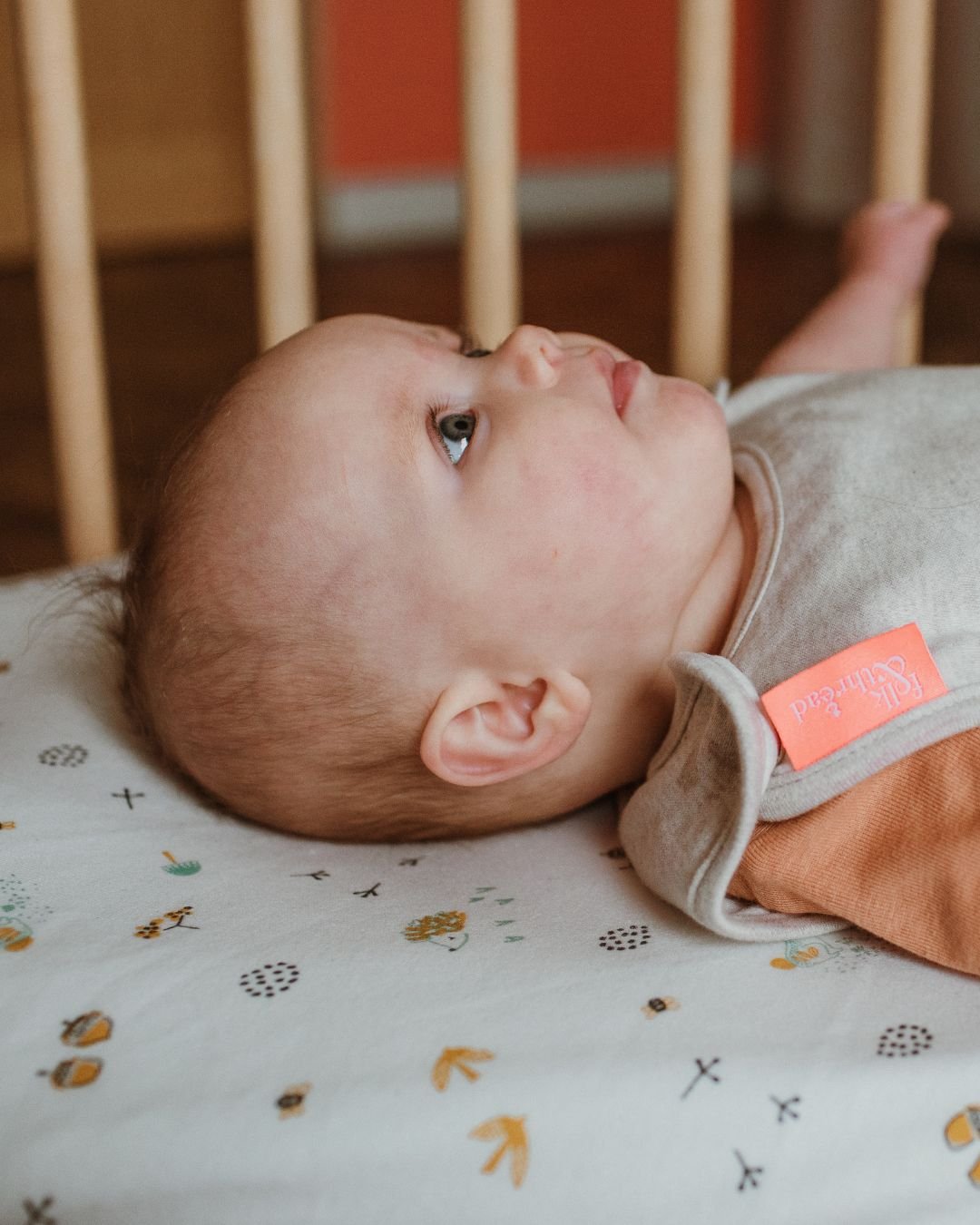
Firm, Flat Mattress — With a Waterproof Cover
Your baby should always sleep on a firm, flat mattress with a waterproof cover. Babies’ airways are small and still developing — their airway opening is much smaller than an adult’s — so a surface that lets the head sink even slightly can affect their breathing. A quick check: press your hand into the mattress. It should feel firm, and the surface should be completely flat with no raised areas.
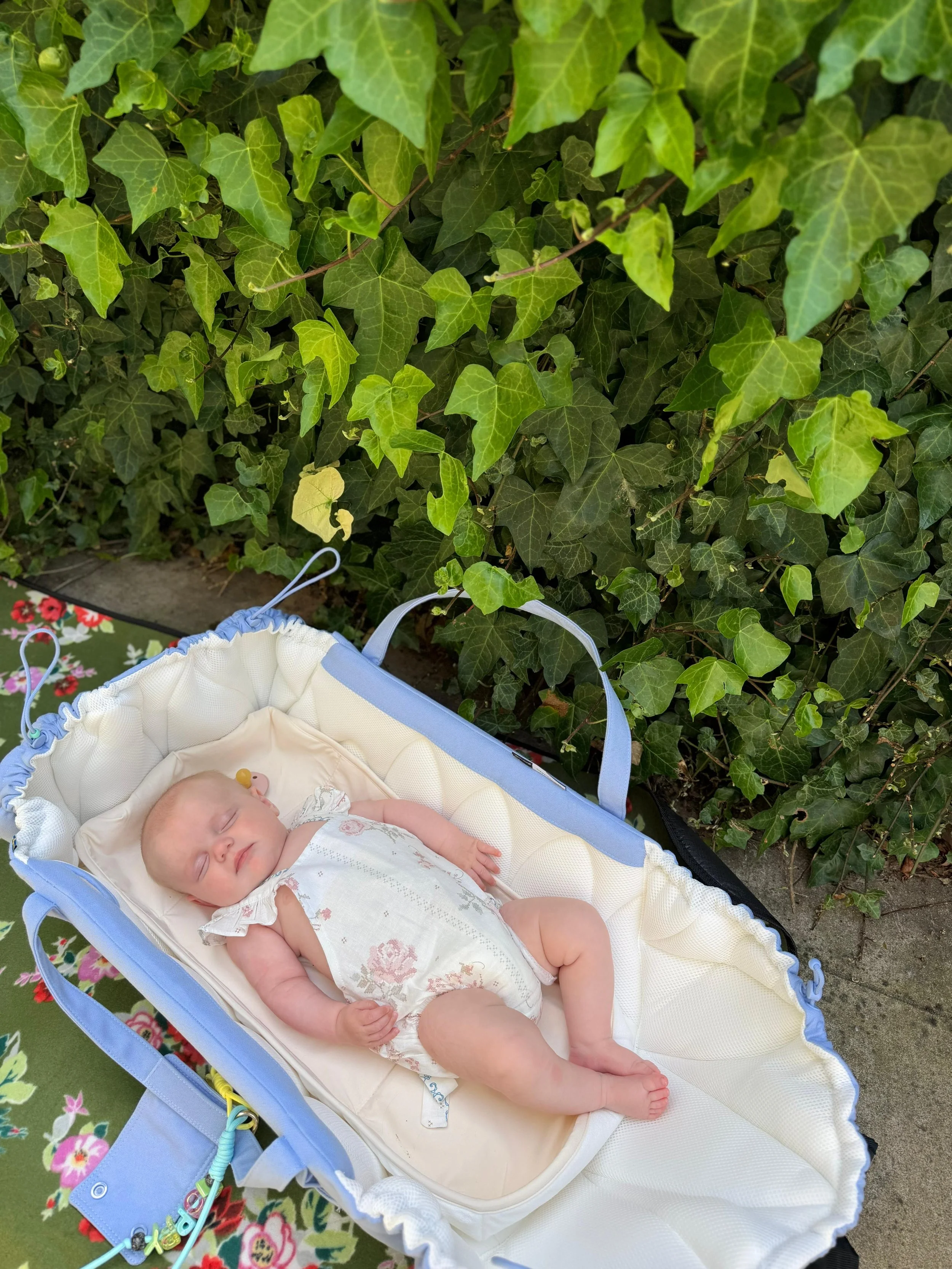
Safe sleep spaces include a cot, crib, Moses basket, or portable sleep space that meets BS/EN safety standards. Bouncers, swings, bean bags, and hammocks are lovely for awake time — but are not suitable for sleep.
Keep the Cot Clear
The safest cot is a clear one. Suffocation and overheating are known risk factors, and babies’ temperature regulation systems are not yet fully developed. Soft objects, padded bumpers, and extra blankets can all increase warmth or move close to baby’s face and could overheat the baby if their heads sink into the surface.
Keep it simple: nothing in the cot except your baby and their sleep space. No pillows, cushions, positioners, pods, quilts, sleep aids, teddies, or bumpers. A well-fitting sleep bag, or a lightweight blanket or sheet tucked in feet-to-foot (feet at the bottom of the cot, blanket no higher than the chest with arms out), is all that is needed.
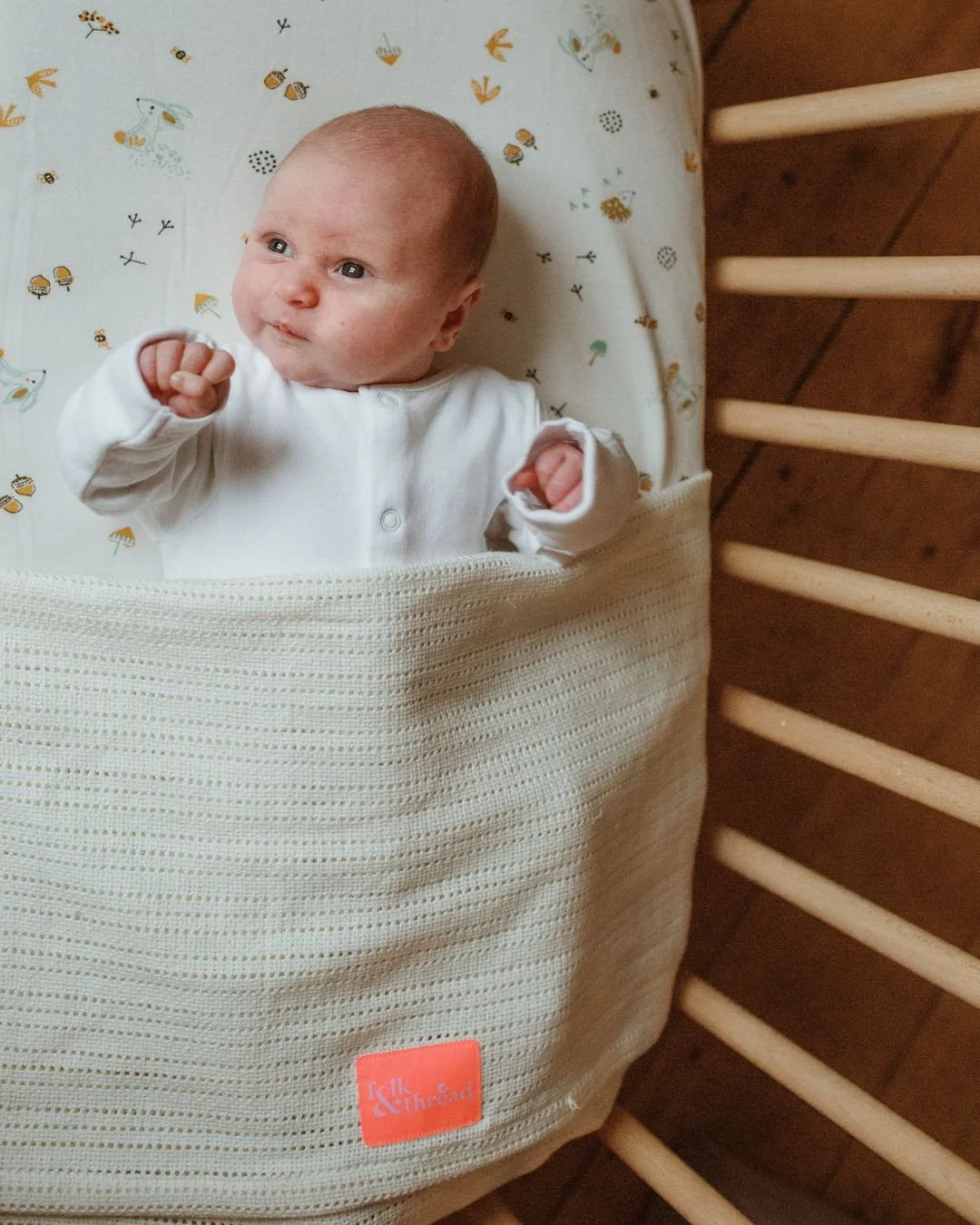
Temperature: Aim for Comfortably Cool
The recommended room temperature for a sleeping baby is 16–20°C. This feels cooler than most people expect, but babies regulate their temperature differently to adults and can overheat more easily. Use a room thermometer — what matters is the temperature in the room where baby sleeps, not the season or the weather outside.
In summer, when it is harder to keep rooms cool, use a lower TOG sleep bag and lighter clothing layers. To check if your baby is comfortable, feel the back of their neck or their chest — you are looking for warm and settled, not hot or sweaty.
One thing many parents don’t know: never put a hat on your baby indoors or in the car. Babies lose heat through their heads, which is how they naturally cool down. Hats and headbands should always be removed before sleep.
Baby Sleep Bags: Simple and Safe
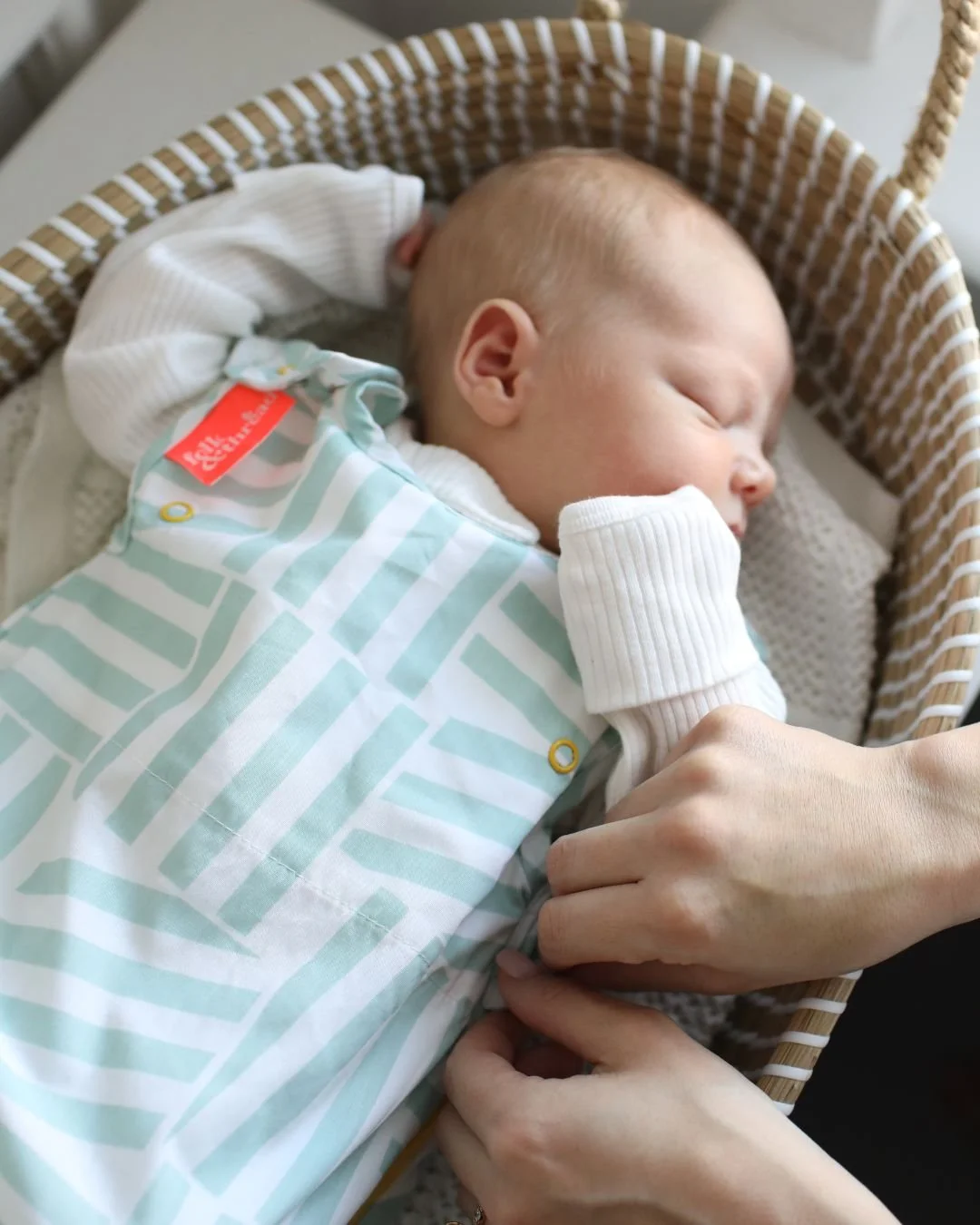
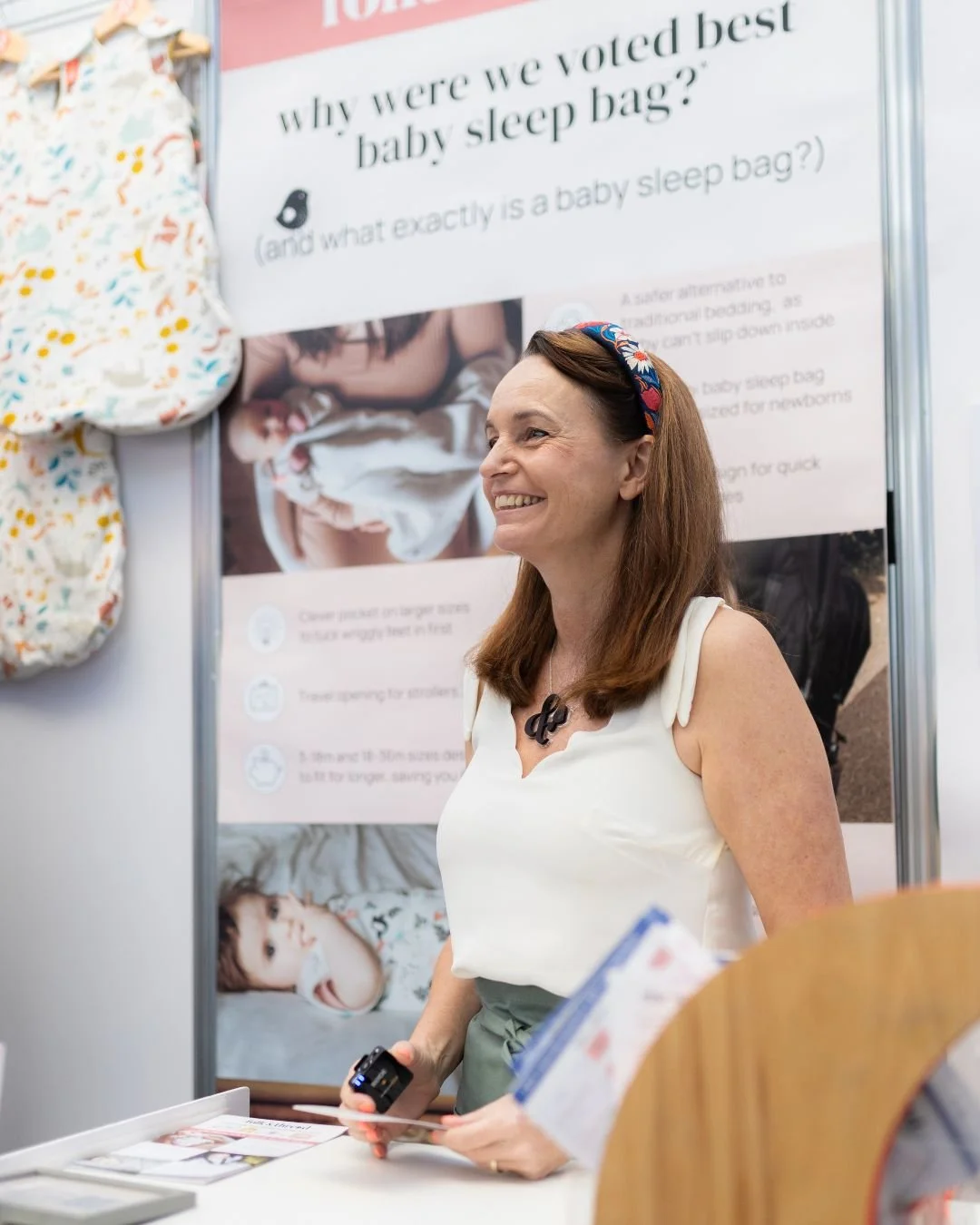
Over 90% of parents in the UK now use a baby sleep bag, and it is easy to see why. A sleep bag is a wearable blanket with a carefully sized neck opening so baby cannot slip down inside, and designed with arm openings so baby’s arms are always free — even from birth. Baby cannot kick them off, and there is nothing loose in the cot. They take the guesswork out of bedtime. A few things to get right:
Size by weight, not age — the neck fit is the key safety feature.
Choose the right TOG for your room: 2.5 TOG for cooler rooms, 1.0 or 0.5 for warmer rooms.
Check the brand’s dressing guide — recommendations vary, and all babies feel temperature a little differently.
A Word on Products and Claims
It is worth being aware that words like ‘breathable,’ ‘temperature-regulating,’ or ‘safer for baby’ appear on many products. There are currently no specific regulations that certify a product as reducing SIDS risk, so these claims are worth treating with caution. Most product safety standards cover things like construction and chemicals — not SIDS.
My advice after 27 years: choose products that help you follow safer sleep guidance. A firm mattress with a waterproof cover, the right sleep bag, and a room thermometer are genuinely all you need.
Also worth knowing: it is natural and normal for babies to wake during the night, especially in the early months. Their ability to rouse from sleep is actually an important protective factor. Be cautious of any product that claims to make your baby sleep longer or deeper — this is not something to aim for in the early months.
Share the Guidance with Everyone Who Cares for Your Baby
Grandparents, childminders, family members — anyone who puts your baby down to sleep should follow the same guidance. Carers from a previous generation may remember things being done differently, and that is completely understandable. A gentle conversation goes a long way. The guidance has changed because the research has improved — and everyone wants the same thing.
Quick Summary
Baby should sleep in the same room as you, including naps, day and night for the first six months
Always place your baby on their back
Firm, flat mattress with a waterproof cover only
Nothing else in the cot — no teddies, sleep aids, pillows, bumpers, or positioners
Room temperature 16–20°C — use a thermometer
No hats or headbands during sleep
Bouncers, swings, and bean bags are for awake time only and when supervised
Never sleep with your baby on a sofa or armchair
Never use a second-hand mattress
Further Resources
The Lullaby Trust — www.lullabytrust.org.uk
NHS Safer Sleep Guidance — www.nhs.uk
BASIS Baby Sleep Info — www.basisonline.org.uk
By Lisa Joyce — One of the UK’s leading Baby Sleep Product Design Expert, Co-Founder of Folk & Thread, 27+ Years in the Industry